Lockout/Tagout (LOTO) Remains a Top OSHA Violation: Recent Enforcement Actions Highlight Persistent Hazardous Energy Risks
- Share
- Issue Time
- Apr 25,2026
Summary
Lockout/Tagout (LOTO) violations (29 CFR 1910.147) remain a top OSHA violation, rising to the 5th most cited standard in FY 2024 with over 2,443 violations and $20 million in penalties.
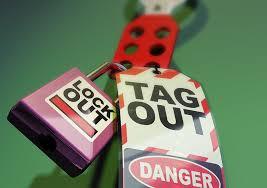
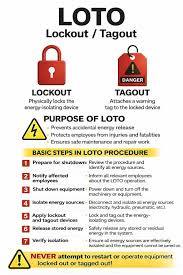
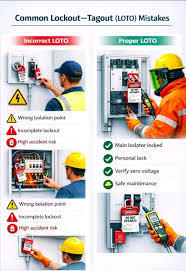
March 2026 – As workplace safety continues to demand heightened vigilance across industrial sectors, hazardous energy control—specifically Lockout/Tagout (LOTO)—remains one of the most frequently cited areas of OSHA non-compliance. Two recent major enforcement actions in early 2026 serve as stark reminders of the severe consequences when proper LOTO procedures are neglected.
Recent OSHS Citations Send a Clear Warning
In March 2026, the U.S. Department of Labor cited Alpha Baking Co. Inc., a Midwest commercial bakery, with repeat and serious safety violations after a worker suffered a broken arm in September 2025 while clearing dough from a production line machine. OSHA issued three repeat and three serious violations for lack of lockout/tagout training, failure to lock out a machine during servicing, and other hazards related to unguarded machines. Proposed penalties totaled $326,276.
Just weeks earlier, federal investigators found Illinois grain silo operator Alliance Grain Co. had violated safety standards after a seasonal laborer suffered a serious foot injury by stepping through an unguarded sump hole and onto a moving paddle conveyor. The agency issued two willful, one serious, and three other-than-serious citations for failing to lock out/tag out machinery and failing to issue permits prior to bin entry, with proposed penalties of $276,407.
These back-to-back cases underscore a troubling reality: despite clear OSHA standards, Lockout/Tagout violations continue to cause preventable workplace injuries—and significant financial penalties.
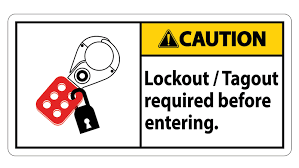
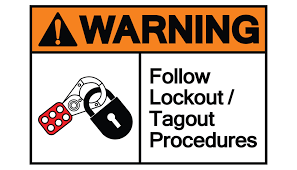
2025 Data: LOTO Ranks #4 on OSHS Top 10 List
The Occupational Safety and Health Administration’s 2025 Top 10 most frequently cited workplace safety violations placed Control of Hazardous Energy (Lockout/Tagout) at No. 4, recording 2,177 violations. Plastic products manufacturers and machine shops topped the list of industries cited for LOTO violations, but industries less traditionally associated with heavy machinery are increasingly seeing citations as well.
Violations commonly involve missing lockout devices, inadequate training, or failure to develop written hazardous energy control procedures. As OSHA emphasizes, controlling hazardous energy is critical: without it, workers face crushing, amputation, or fatal injuries.
The renewed National Emphasis Program (NEP) on Amputations in Manufacturing, which remains in effect through June 2030, continues to target Lockout/Tagout and machine guarding practices across manufacturing sectors. Employers with high inspection numbers related to LOTO or a history of employee-reported amputations face heightened scrutiny.
The Three Pillars of Lockout/Tagout Compliance
To build a robust hazardous energy control program, organizations should focus on three core areas:
1. Comprehensive Written Procedures
Machine-specific LOTO procedures must identify all energy sources, outline step-by-step shutdown and isolation protocols, and specify verification methods. OSHA 29 CFR 1910.147 requires employers to establish an energy control program and utilize procedures for affixing appropriate lockout or tagout devices to energy-isolating devices.
2. Periodic Inspections and Documentation
OSHA mandates that lockout/tagout procedures be inspected at least annually to ensure all steps are followed correctly. Inspections must include interviews with authorized employees and a written evaluation of the program’s effectiveness.
3. Effective Training
Generic training is not enough. Workers need machine-specific training that covers how to lock out the specific equipment they work on, how to release stored energy, and how to achieve a zero-energy state before beginning maintenance. Authorized employees who perform lockout/tagout must have the training, knowledge, and experience specific to the machinery they service.
Industry Outlook and Emerging Standards
The industrial safety landscape continues to evolve. The release of ANSI/ASSP Z244.1-2024—The Control of Hazardous Energy – Lockout, Tagout, and Alternative Methods—provides updated guidance on hazardous energy control requirements. Internationally, new standards such as EN 17975:2025 offer additional frameworks for managing risks related to energies and fluids during maintenance activities.
Recent technological advancements extending to computer-based controls of hazardous energy are also prompting OSHA to review its existing LOTO standard for potential updates.
A Call to Action
For safety and operations leaders, the message is clear: Lockout/Tagout is not optional. It is not merely a “box-checking exercise.” It is the bedrock of safe machine maintenance. With OSHA levying six-figure penalties on non-compliant companies and amputation hazards remaining a top enforcement priority, the cost of failing to implement effective LOTO procedures—in both human and financial terms—has never been higher.

Lita Lock, a China based manufacturer, since 2017, active in manufacturing safety padlocks, electrical lockout, valve lockout, lockout station, tags and other lockout & tagout for global partners.
To help customers compliance with OSHA Standard 29 CFR 1910.147, Lita Lock does not only offer design, production and final assembly, but also a complete lockout & tagout solution for various industries.
Lita Lock pursues the competitiveness on creative, quality control, technology and sustainable development. As the founder of Lita Lock, Iris Chen says: “Many things have changed, but one thing that has not—our original intention to start businesses: keeping workers safe.” Together, we make work environments safer.
Sales Manager: Iris Chen
Email: iris@litalock.com
Whatsapp: + 86 13165872593
#CircuitBreakerLockoutKit #ValveLockoutKit #CableLockoutKit #PlugLockoutKit #PneumaticLockoutKit
#LockoutKit #LockoutTagoutKit #LOTOKit #SafetyLockoutKit #IndustrialLockoutKit #ElectricalLockoutKit #LockoutTagoutEquipment #LOTOSafetyKit #OSHALockoutKit #LockoutKitforManufacturing #LockoutKitforElectricalPanels #LockoutKitforIndustrialMaintenance #BradyLockoutKit #MasterLockLockoutKit #ABUSLockoutKit #HowtoChooseaLockoutKit #CustomizableLockoutKit #Litalock #Customlockoutpanelforelectricalsafety #Customizedlockoutboard #Personalizedlockoutboard #Lockouttagoutboard(LOTOboard) #PersonalizedLOTOboardforworkplacesafety #Customizablelockoutstationformachinery #EngravedlockoutboardforOSHAcompliance #OSHAcompliantlockoutboardforenergycontrol #Lockoutpointidentificationboard #Magneticoradhesivelockoutboard #Modularlockoutboardformultiplepadlocks #Lockoutdeviceorganizationboard #UniversalLockoutKit #BradyLockoutKit #ABUSLockoutKit #MasterLockLOTOKit #PanduitLockoutKit #OSHAcompliantlockouttagoutkit #MaintenanceLockoutKit #IndustrialSafetyKit #manufacturingloto #chemicalindustyloto #oilandgasloto #electricalloto #miningloto #constructionloto #maritimeloto #powergenerationloto #Circuitbreakerlockout #Electricallockoutdevices #Lockouttagoutelectrical #LOTOsafetyequipment
#Circuitbreakersafetylock #Togglebreakerlockout #Miniaturecircuitbreakerlockout #MCBlockout #Multi-polebreakerlockout #LOTOsafety # OSHAlockouttagout #lockouttagout #hazardousenergycontrol #lockouttagoutprocedures #CFR1926.417lockouttagout